
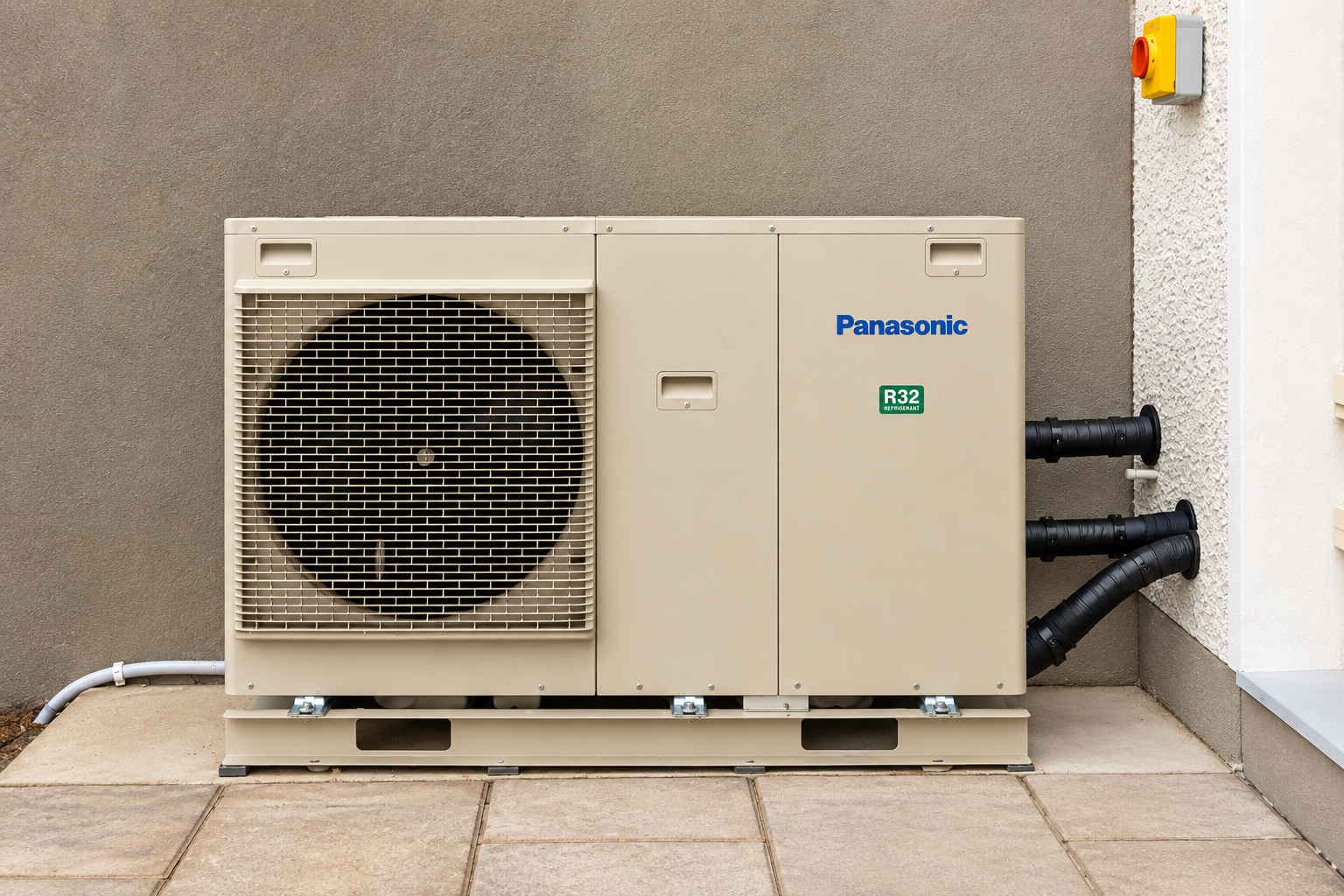
Air-to-Water Heat Pumps for New Builds and Retrofits
Air-to-water heat pumps provide an energy-efficient solution for heating and domestic hot water in new-build homes and suitable existing properties. When correctly specified and installed, these systems can deliver comfortable indoor temperatures, reliable performance and efficient operation.
At MOS Mechanical, we provide heating solutions tailored to the requirements of each property. Our team has extensive experience in heat pump installations and works to ensure that systems are appropriately specified, installed and commissioned for efficient, reliable operation.
We also install air-to-water heat pumps as part of home energy retrofit projects. Our experience allows us to advise homeowners on suitable heating solutions, taking into consideration the property’s existing heating system, energy performance and individual requirements.
Eligible homeowners may be able to avail of SEAI Home Energy Upgrade grants, subject to the applicable scheme requirements. Our team can provide guidance on heat pump installations and available options for different property types and budgets.
Heat Pump Brands


FAQ
An air-to-water heat pump is an energy-efficient heating system that extracts heat from the outside air and transfers it into your home’s heating and hot water systems.
Unlike traditional gas or oil boilers, heat pumps use electricity to move heat rather than generate it through combustion. This allows them to deliver several units of heat energy for each unit of electricity consumed, depending on operating conditions.
Air-to-water heat pumps can provide space heating through radiators or underfloor heating, as well as domestic hot water when connected to a suitable cylinder.
When correctly designed, installed and commissioned, a heat pump can provide comfortable, reliable and energy-efficient heating throughout the year.
Yes. Modern air-to-water heat pumps can provide reliable heating and hot water when they are correctly designed, installed and maintained.
If you’re considering replacing an existing gas boiler, it’s important to establish whether your home is suitable for a heat pump. Factors such as insulation, heat loss, radiator sizing, pipework and hot water requirements all influence system performance.
Heat pumps generally operate most efficiently at lower heating water temperatures, so some properties may require radiator upgrades or other improvements to achieve the best results.
At MOS Mechanical, we assess the heating requirements of each property and provide guidance on suitable heat pump solutions.
A correctly specified and installed heat pump can provide dependable year-round comfort while reducing the energy required for heating. Actual running costs will depend on factors including electricity prices, the home’s heat demand and system efficiency.
Air-to-water heat pumps are an environmentally friendly alternative to traditional fossil-fuel heating systems when correctly designed and installed.
Rather than burning gas or oil to generate heat, they extract naturally occurring heat from the outside air and use electricity to transfer that energy into your home’s heating and hot water systems.
Because heat pumps can deliver several units of heat for each unit of electricity consumed, they can significantly reduce the energy required for heating and associated carbon emissions. The environmental benefit depends on system efficiency, the electricity supply and other operating factors.
Heat pumps can also work alongside solar PV systems, allowing homeowners to use some of the electricity generated by their solar panels to help power their heating system.
At MOS Mechanical, we focus on correctly specified, energy-efficient heating solutions designed to provide reliable comfort while reducing reliance on fossil fuels.
The initial cost of installing an air-to-water heat pump can be higher than replacing a traditional gas or oil boiler. However, it is important to consider both the installation cost and the long-term running costs when comparing heating systems.
The cost of a heat pump installation depends on several factors, including the size of the property, its heating requirements, existing radiators and pipework, hot water requirements and whether additional improvements are necessary.
Heat pumps are highly efficient heating systems and can deliver several units of heat energy for every unit of electricity consumed. However, actual running costs and potential savings depend on the property’s heat demand, system efficiency, electricity tariffs and the heating system being replaced.
For existing homes, SEAI heat pump grants may be available to eligible homeowners, subject to the relevant scheme requirements. These grants can help reduce the upfront installation cost.
At MOS Mechanical, we provide guidance on suitable heat pump installations and help customers understand the options available for their property and budget.
A correctly designed and installed heat pump can provide efficient, reliable heating and hot water for many years.
Yes. Modern air-to-water heat pumps are designed to operate in cold weather, including when outdoor temperatures fall below freezing.
Even when the outside air feels very cold, it still contains heat energy that a heat pump can extract and transfer into your home’s heating system.
As outdoor temperatures decrease, the heat pump may need to work harder to maintain comfortable indoor temperatures. Its efficiency and available heating capacity can also reduce in colder conditions.
At MOS Mechanical, we consider the heating requirements of each property, including local winter design temperatures, when specifying suitable heat pump systems.
When correctly designed, installed and commissioned, an appropriately selected heat pump can provide reliable heating throughout the Irish winter.
Some air-to-water heat pumps can provide both heating and cooling, depending on the model and how the system is designed.
Heat pumps with a cooling function can reverse their operation to remove heat from inside a building and transfer it outdoors.
However, not every heat pump installation is suitable for cooling. The system must include compatible equipment, such as suitable fan-coil units or other appropriately designed cooling emitters, together with the necessary controls and condensation protection.
Traditional radiator heating systems are not generally designed to provide effective cooling, and existing installations may require additional equipment or modifications.
At MOS Mechanical, we can advise on the capabilities of different heat pump systems and whether cooling is technically suitable for a particular property.
Yes, heat pumps can be installed in apartments, although suitability depends on the building, available space and existing heating arrangements.
Air-to-water heat pumps require a suitable location for the outdoor unit, along with appropriate connections to the property’s heating and hot water systems.
For apartments, additional considerations may include outdoor space, noise requirements, planning restrictions, building management approval and whether the property uses an individual or communal heating system.
Some apartment developments use centralised heat pump systems to provide heating and hot water to multiple homes, while others may be suitable for individual installations.
At MOS Mechanical, we can provide guidance on the technical requirements of heat pump installations and help determine suitable heating solutions for different types of residential properties.
Each apartment or development should be assessed individually before deciding whether a heat pump installation is practical.
Not necessarily. The amount of work required before installing an air-to-water heat pump depends on your property’s insulation, heat loss, existing heating system and hot water requirements.
Some homes may already be suitable for a heat pump installation, while others could benefit from improvements to insulation, airtightness or heating distribution systems.
Heat pumps generally operate most efficiently at lower heating water temperatures. Depending on the property, existing radiators may need to be upgraded or additional radiators installed to provide sufficient heat at these temperatures.
Other installation requirements may include a suitable domestic hot water cylinder, electrical connections, pipework modifications and an appropriate location for the outdoor heat pump unit.
A heat loss assessment helps determine the heating requirements of the property and whether improvements are needed before installation.
At MOS Mechanical, we consider the existing heating system and individual property requirements when advising on suitable heat pump solutions.
Our aim is to ensure that each installation is correctly specified to provide comfortable, efficient and reliable heating.
Yes, heat pumps can be installed in some historic and protected buildings, although careful consideration must be given to the building’s construction, architectural features and conservation requirements.
Air-to-water heat pumps can provide an energy-efficient heating solution for older properties, but their suitability depends on factors such as insulation, heat loss, existing heating systems and the availability of a suitable outdoor installation location.
For protected structures or properties within Architectural Conservation Areas, planning permission or other approvals may be required. Any proposed installation should respect the building’s historic character and comply with applicable conservation and planning requirements.
Older buildings may also require heating system modifications to achieve efficient heat pump operation. These should be assessed carefully to avoid unnecessary alterations to significant historic features.
At MOS Mechanical, we can provide guidance on the heating requirements and technical considerations of installing heat pumps in older properties, helping homeowners explore suitable solutions while respecting the building’s existing structure.
Yes, in many cases an air-to-water heat pump can be installed without the need for drilling boreholes into the ground.
Unlike ground-source heat pumps, air-to-water heat pumps extract heat from the outside air. This means they do not normally require extensive ground excavation or underground boreholes.
However, an air-to-water heat pump still requires suitable connections between the outdoor unit and the property’s heating system. This may involve making openings through external walls for insulated pipework, electrical cables and other necessary services.
The installation also requires a suitable outdoor location, with consideration given to airflow, noise, access for maintenance and any applicable planning requirements.
If drilling into the building itself is restricted or prohibited, the feasibility of an installation will depend on whether an acceptable alternative route for the required connections can be found.
At MOS Mechanical, we can assess the practical installation requirements and advise on suitable heat pump solutions for the property.
No. Underfloor heating is not essential for installing an air-to-water heat pump.
Heat pumps can operate with both underfloor heating and appropriately sized radiator systems.
Underfloor heating is particularly well suited to heat pumps because it can provide comfortable heating at lower water temperatures, helping the system operate efficiently.
Many existing homes can also use heat pumps with radiators. However, some radiators may need to be upgraded or replaced to provide sufficient heat at the lower water temperatures typically used by heat pumps.
The suitability of an existing heating system depends on the property’s heat loss, radiator sizes and required heating temperatures.
At MOS Mechanical, we assess the heating requirements of each property and advise on suitable heat distribution systems to support efficient and reliable heat pump operation.
Modern air-to-water heat pumps are designed to operate with relatively low noise levels, making them suitable for many residential properties.
Like other mechanical equipment, heat pumps produce some sound during operation. The main sources of noise from an outdoor unit are the fan, compressor and associated components.
The actual noise level depends on the heat pump model, operating conditions, installation location and distance from neighbouring properties. Noise levels can also vary during colder weather and defrost cycles.
Correct positioning and installation are important. Outdoor units should be located with consideration for nearby windows, neighbouring homes, surrounding walls and the manufacturer’s installation requirements.
At MOS Mechanical, we consider noise performance and suitable outdoor unit positioning when planning heat pump installations, helping to minimise unnecessary disturbance while maintaining efficient operation.
Yes. Like any heating system, air-to-water heat pumps require regular maintenance to ensure they continue operating safely, efficiently and reliably.
Many manufacturers recommend an annual professional service, although the exact maintenance requirements depend on the make, model and installation.
A typical heat pump service may include checking system water pressure, inspecting electrical and hydraulic components, examining the outdoor unit, checking operating temperatures and reviewing the system’s overall performance.
Regular maintenance can help identify potential problems early, maintain efficient operation and reduce the likelihood of unexpected breakdowns.
Homeowners should also ensure that the outdoor unit remains free from leaves, debris and other obstructions that could restrict airflow.
At MOS Mechanical, we recommend following the manufacturer’s servicing schedule and arranging maintenance with a suitably qualified heating professional to help protect the system’s performance and service life.
Installing an air-to-water heat pump will generally increase your electricity consumption because the system uses electricity to provide heating and domestic hot water. However, if you are replacing an oil or gas boiler, you will also reduce or eliminate the fuel previously used for heating.
Heat pumps can be highly efficient, delivering several units of heat energy for each unit of electricity consumed. This means they may require less purchased energy to provide the same amount of heating than a conventional fossil-fuel boiler.
Whether your overall energy bills increase or decrease depends on several factors, including your property’s heat loss, the efficiency of the heat pump, electricity tariffs, previous heating costs and how the system is operated.
Heat pumps generally perform most efficiently at lower heating water temperatures, making correct system design, radiator sizing and heating controls particularly important.
A well-designed and correctly commissioned heat pump can provide efficient heating and hot water while helping to reduce reliance on fossil fuels.
At MOS Mechanical, we consider the heating requirements of each property when advising on suitable heat pump solutions, helping homeowners understand the factors that influence efficiency and running costs.
Yes. Installing an air-to-water heat pump can help reduce your home’s carbon footprint, particularly when replacing a traditional oil or gas heating system.
Unlike fossil-fuel boilers, heat pumps do not burn fuel to generate heat. Instead, they use electricity to extract heat from the outside air and transfer it into your home’s heating and hot water systems.
Because heat pumps can deliver several units of heat energy for every unit of electricity consumed, they can significantly reduce the energy required for heating.
The overall environmental benefit depends on factors such as the efficiency of the system, the electricity supply, the refrigerant used and the heating system being replaced.
When correctly designed, installed and maintained, a heat pump can provide an efficient, lower-carbon heating solution.
At MOS Mechanical, we focus on providing appropriately specified heat pump installations that support energy efficiency, reliable performance and reduced reliance on fossil fuels.
Yes. Specialist industrial heat pumps can be used in certain manufacturing and industrial processes to provide heating and recover waste heat.
Industrial heat pumps operate on similar principles to domestic heat pumps but are designed for different temperature requirements, heating capacities and operating conditions.
Depending on the application, they can help businesses reduce energy consumption and reliance on fossil-fuel heating systems.
However, industrial heat pumps require specialist design and equipment, and their suitability depends on the temperature, capacity and operational requirements of the individual process.
Choosing the correct air-to-water heat pump depends on your property’s heating requirements, insulation levels, size and existing heating system.
An assessment of the property’s heat loss is an important part of determining the heating capacity required. Other considerations include radiator or underfloor heating requirements, domestic hot water demand, available outdoor space and electrical supply.
Selecting the correct heat pump is important for maintaining comfortable indoor temperatures, efficient operation and reliable performance.
An incorrectly sized system may struggle to meet heating requirements or operate inefficiently.
At MOS Mechanical, we consider the individual requirements of each property and provide guidance on suitable heat pump solutions for new-build homes and retrofit projects.
The time required to install an air-to-water heat pump depends on the property, the existing heating system and the amount of additional work required.
For new-build homes, heat pump installations can be incorporated into the construction programme alongside other plumbing and heating works.
For existing homes, the installation may involve removing an old heating system, upgrading radiators, modifying pipework, installing a suitable hot water cylinder and completing electrical connections.
Once the heat pump and associated components have been installed, the system must be correctly commissioned and tested to ensure it operates as intended.
At MOS Mechanical, we assess the installation requirements of each project and provide guidance on the work involved and the expected installation programme.
The overall timeframe will vary depending on the property’s individual requirements.
Should I leave my heat pump running all the time?
Air-to-water heat pumps generally operate most efficiently when maintaining a consistent indoor temperature rather than repeatedly heating a property from cold.
Unlike traditional gas or oil boilers, heat pumps are designed to deliver heat efficiently at lower water temperatures. This often means operating for longer periods at a lower output.
During colder weather, allowing the system to maintain a steady temperature can help provide comfortable heating while avoiding unnecessary energy consumption.
However, this does not mean the heat pump must run continuously. Modern systems use heating controls, thermostats and weather compensation to adjust operation according to the property’s heating requirements.
The most efficient operating settings depend on the home’s insulation, heat loss, heating distribution system and occupancy patterns.
At MOS Mechanical, we recommend following the manufacturer’s guidance and ensuring the heating controls are correctly configured for the individual property.
Yes. The Sustainable Energy Authority of Ireland (SEAI) provides grants to help eligible homeowners install energy-efficient heat pump systems.
The level of financial support available depends on the property, the type of installation and the applicable grant scheme. Additional support may also be available for certain heating system upgrades required as part of the installation.
To qualify, your home must meet the relevant SEAI eligibility and heat loss requirements. Depending on the age and condition of the property, a technical assessment may be required.
Homeowners applying directly must use an SEAI-registered contractor for the relevant works and obtain grant approval before installation begins.
Alternatively, eligible homeowners may choose to complete their energy upgrades through a registered One Stop Shop, which can manage the grant application and wider upgrade process.
At MOS Mechanical, we can provide guidance on heat pump installation requirements and help homeowners understand the options available for their property.
For the latest grant amounts, eligibility criteria and application information, visit the official SEAI website.
The payback period of an air-to-water heat pump depends on the installation cost, available grants, energy prices and the efficiency of the heating system being replaced.
Heat pumps can operate very efficiently, but the financial savings will vary from property to property.
When calculating the potential payback period, it is important to consider the initial installation cost, any SEAI grants available, the property’s heating requirements, expected electricity consumption and the cost of operating the existing heating system.
A simple payback estimate can be calculated by dividing the additional upfront investment by the expected annual savings in heating costs. However, this is only an estimate and does not account for future changes in energy prices, maintenance costs or equipment replacement.
Some homeowners may achieve meaningful savings over time, while others may find that the main benefits are improved energy efficiency, reduced carbon emissions and moving away from fossil-fuel heating.
At MOS Mechanical, we focus on correctly specified and installed heat pump systems that provide efficient, reliable heating suited to each property’s requirements.